UI / UX Design
Nova
Nova is a digital assistant for UK paramedics that automates patient reporting, provides real‑time translation, and delivers actionable insights — helping emergency teams work faster and with greater clarity. Impact: Cut documentation time by 45% and improved translation accuracy in multilingual emergencies.
Year :
2024 - 2025
Industry :
Healthcare & tech
Client :
University project (final year)
Project Duration :
9 months
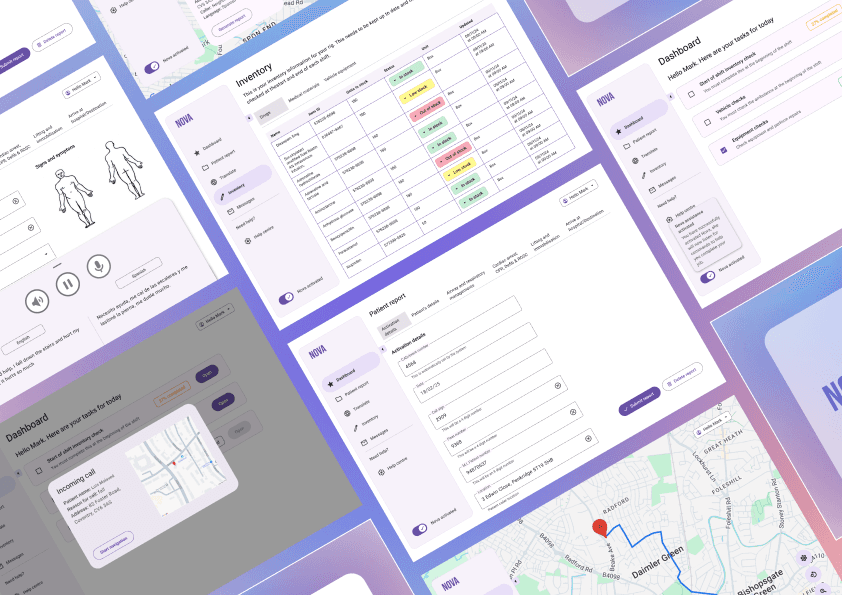
NOVA – CLARITY, SPEED, AND SUPPORT — WHEN EVERY SECOND COUNTS.
✨ Success metrics
Reduced average time to record patient data by 45% (prototype usability testing)
Improved information clarity and retrieval accuracy by 60% during simulated emergency workflows
Increased user confidence and satisfaction from 3.1 to 4.8/5 in usability testing
Expected impact: faster decision‑making, reduced cognitive load, and improved communication between paramedics and hospital staff
Context
In the fast‑paced, high‑stress world of emergency medicine, paramedics must make life‑saving decisions within seconds — often while juggling patient care, note‑taking, navigation, and communication.
Nova emerged from my interest in designing technology that alleviates pressure in critical environments. Through research into the daily challenges faced by UK paramedics, I discovered that many still rely on manual reporting processes, fragmented systems, and limited tools for translation and communication.
This insight sparked the concept for Nova — a tablet‑based digital assistant built to support paramedics in the field through automation, clarity, and real‑time assistance.
Software: Adobe suit, Figma, Maze, Miro, Notion, Zoom.
Skills: Accessibility design, Branding, Competitor analysis, Data collection & analysis, Information architecture, Journey mapping, Usability testing, User research & testing, UX & UI, Wireframing & Prototyping.
RESEARCH & DISCOVERY
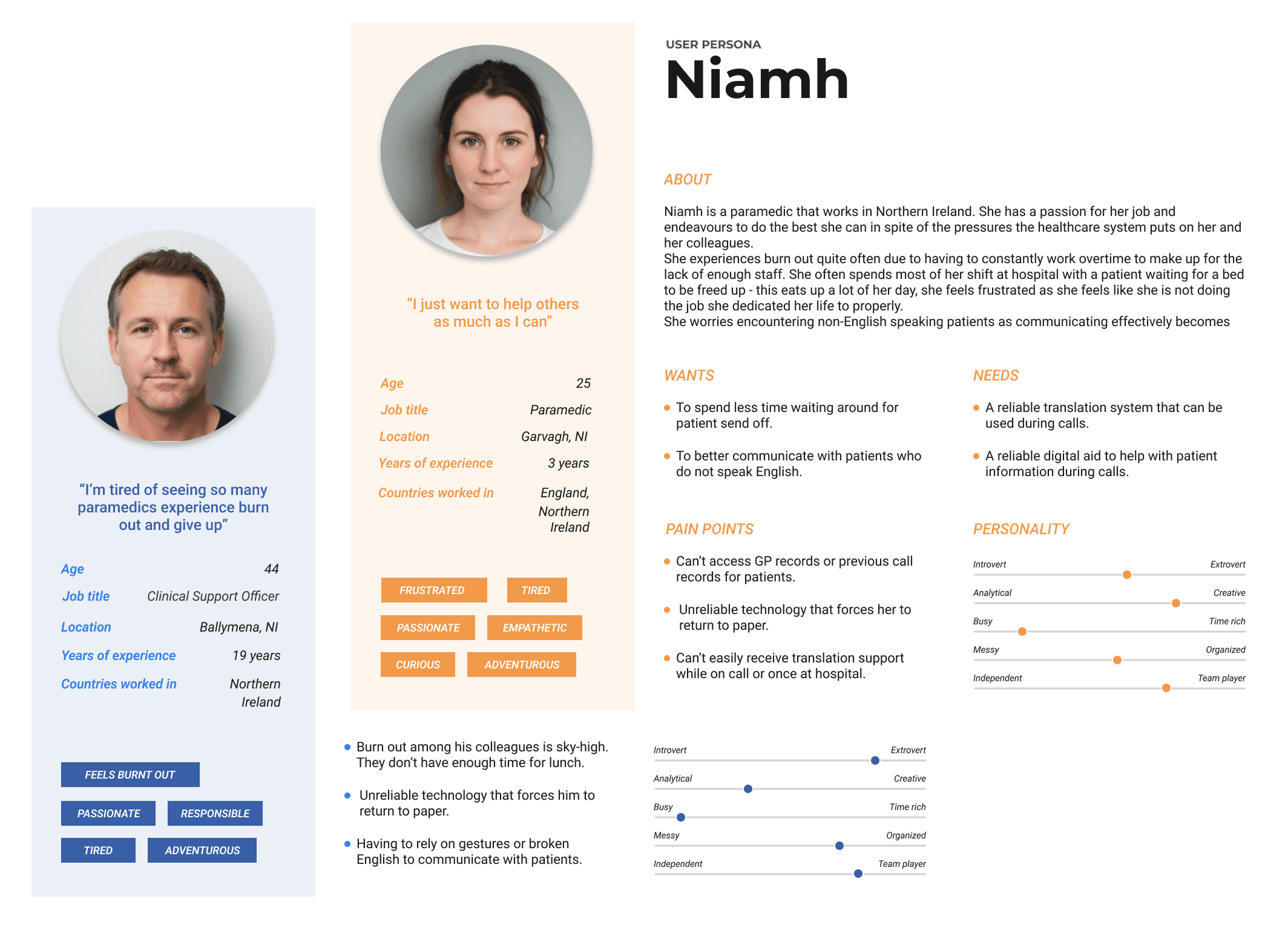
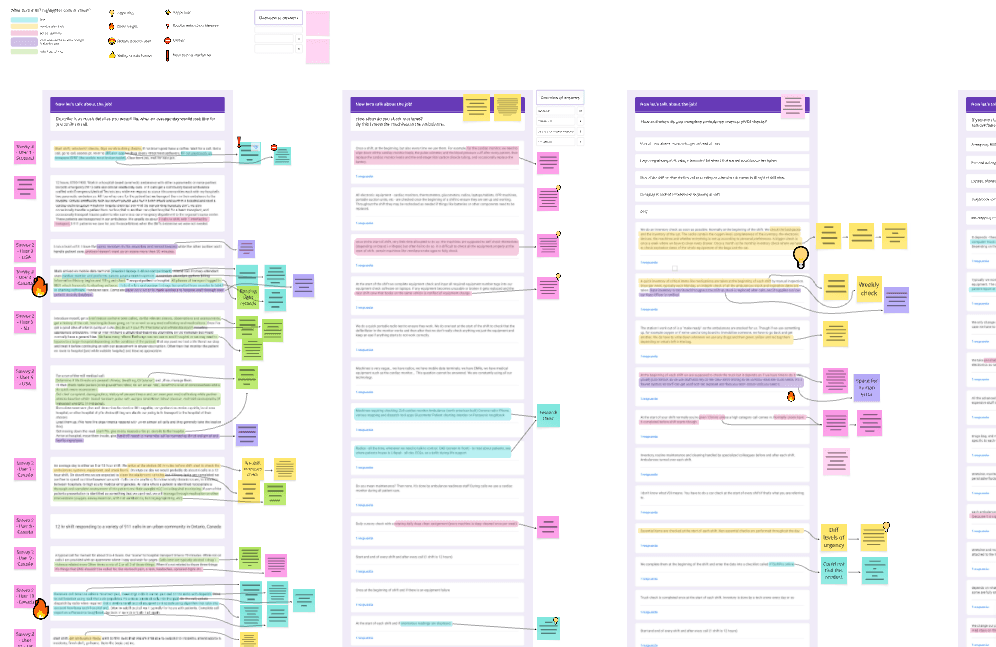
I began by exploring the paramedic workflow within NHS ambulance services to understand how technology fits into their daily operations. Through informal interviews, paramedics described the intensity and unpredictability of their work — managing life‑threatening situations while navigating limited time, space, and tools. They expressed frustration over constant switching between patient care, reporting, and equipment management, often relying on manual note‑taking and paper‑based systems.
Secondary research into existing emergency service technologies revealed four major challenges:
Manual data entry during emergencies
Language barriers between patients and responders
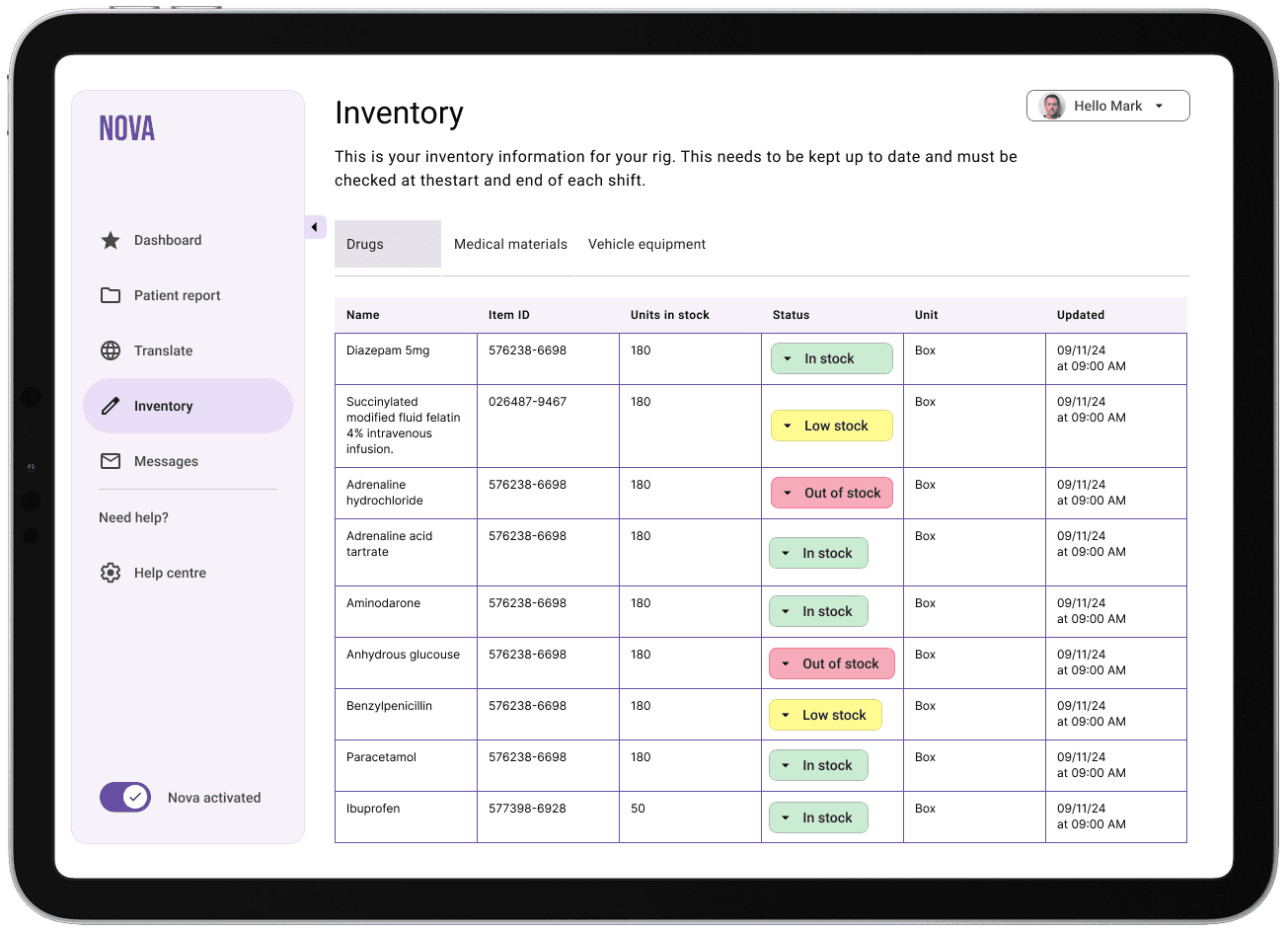
Inefficient inventory tracking
Lack of integration and real‑time data insights
Mapping the current journey from dispatch to hospital handover highlighted cognitive overload and inefficiency. This revealed an opportunity for hands‑free, context‑aware assistance that could streamline documentation, improve communication, and enhance overall efficiency on the front line.
Here is my initial research brief.
CONCEPT & IDEATION
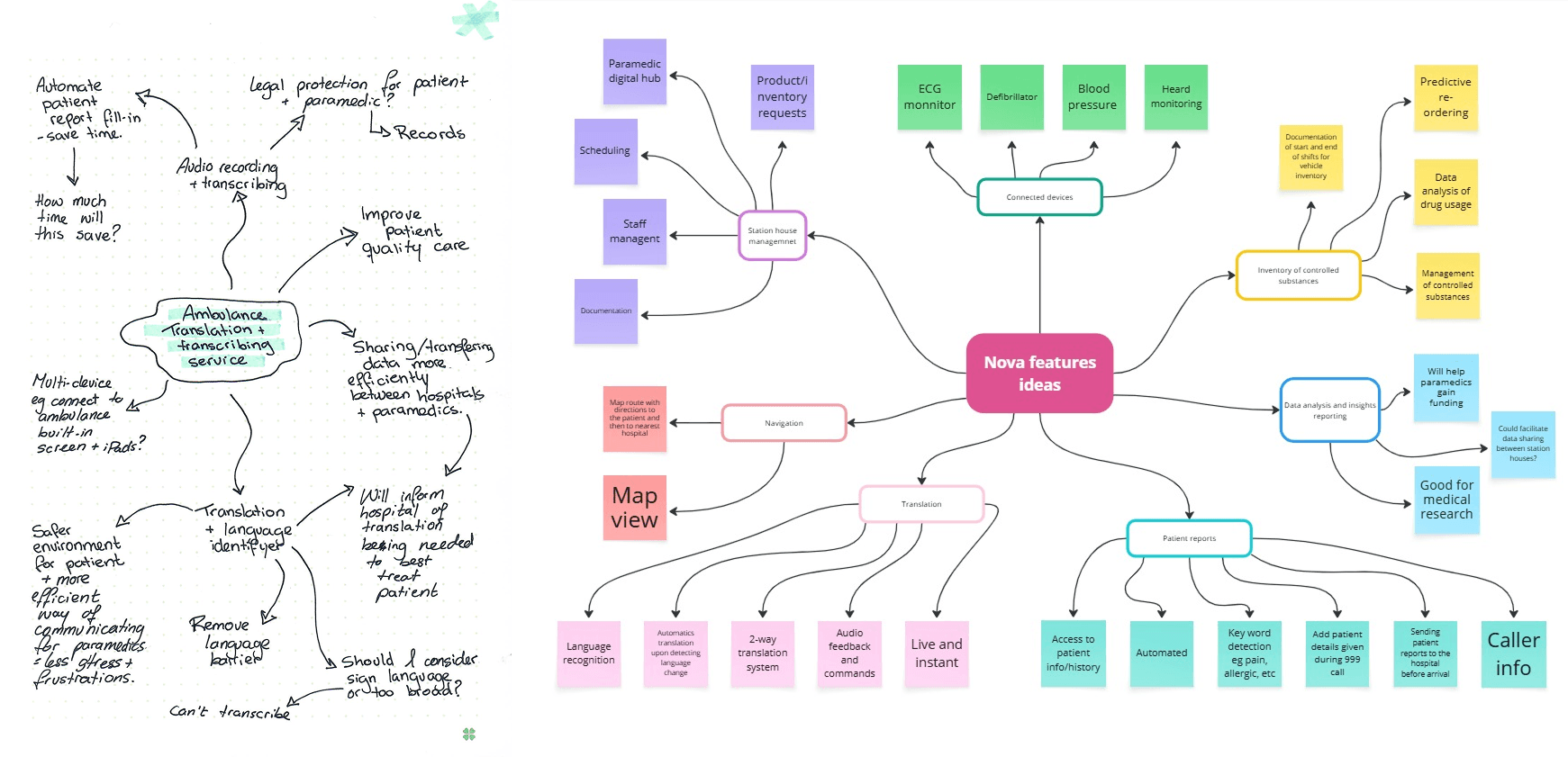
From these findings, Nova was conceptualised as a digital assistant capable of listening, learning, and supporting paramedics in real time. Key features included:
Voice‑activated transcription of patient information
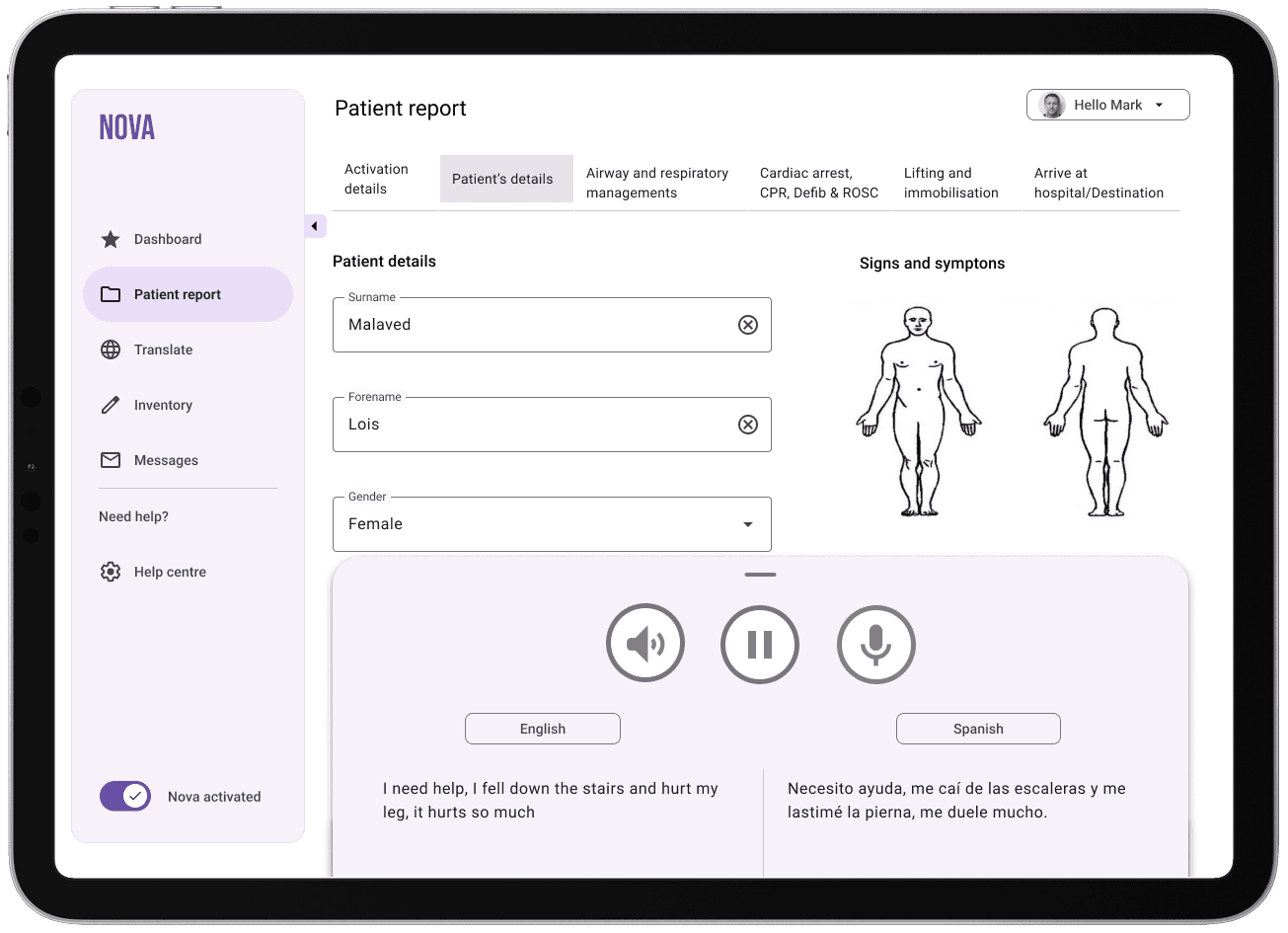
Real‑time translation through live voice‑to‑text and audio output
Automated reporting to populate patient care records
Integrated data insights for faster, better‑informed decisions
Full voice‑only navigation for hands‑free operation
The name Nova represents light and clarity — guiding professionals through high‑pressure moments with confidence and precision.
DESIGN DEVELOPMENT
With the concept validated, I focused on building a clear, accessible interface tailored to the ambulance environment.
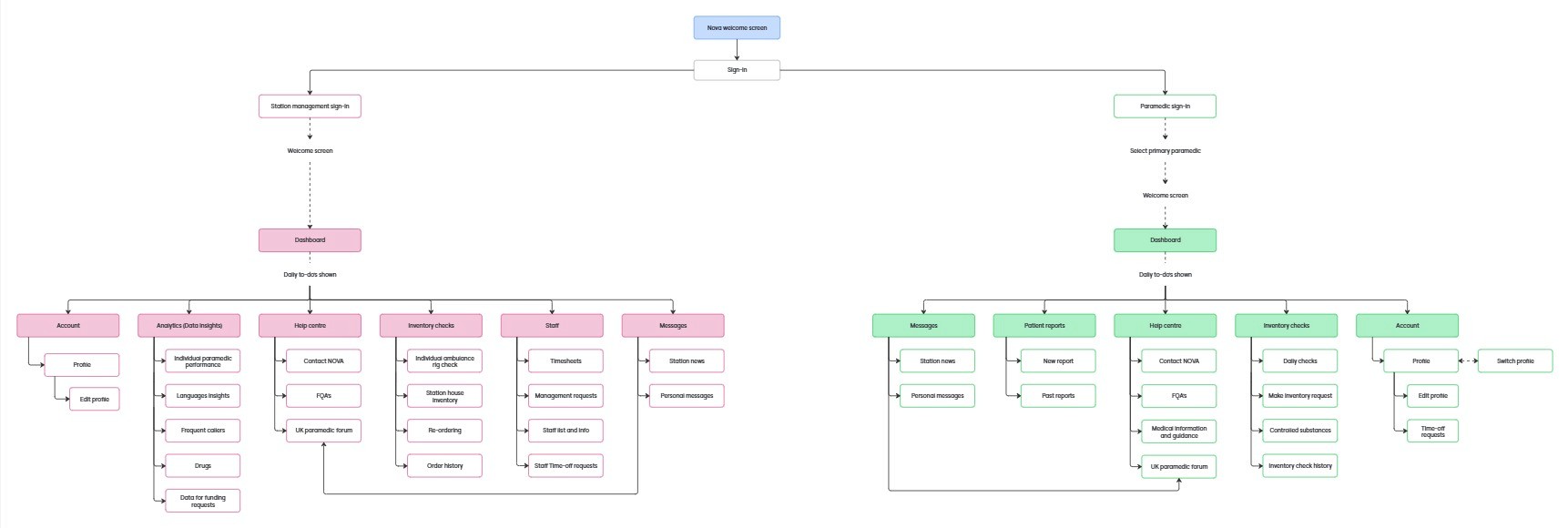
Starting with hand‑drawn sketches, I explored layouts that balanced visibility and usability, then evolved them into low‑fidelity wireframes in Figma to refine navigation and hierarchy before moving into high‑fidelity prototyping.
Throughout the process, I prioritised simplicity and speed — ensuring Nova could be operated quickly, even under stress or in motion. Accessibility and legibility were central, leading to a design system built around a high‑contrast palette of lavender purple (#9479B9), blue‑violet (#6A6BC9), white, and black.
I also developed Nova’s brand identity to integrate seamlessly within NHS systems while maintaining warmth and personality. The goal was to create a product that felt supportive and human, conveying calm and confidence without compromising clarity.
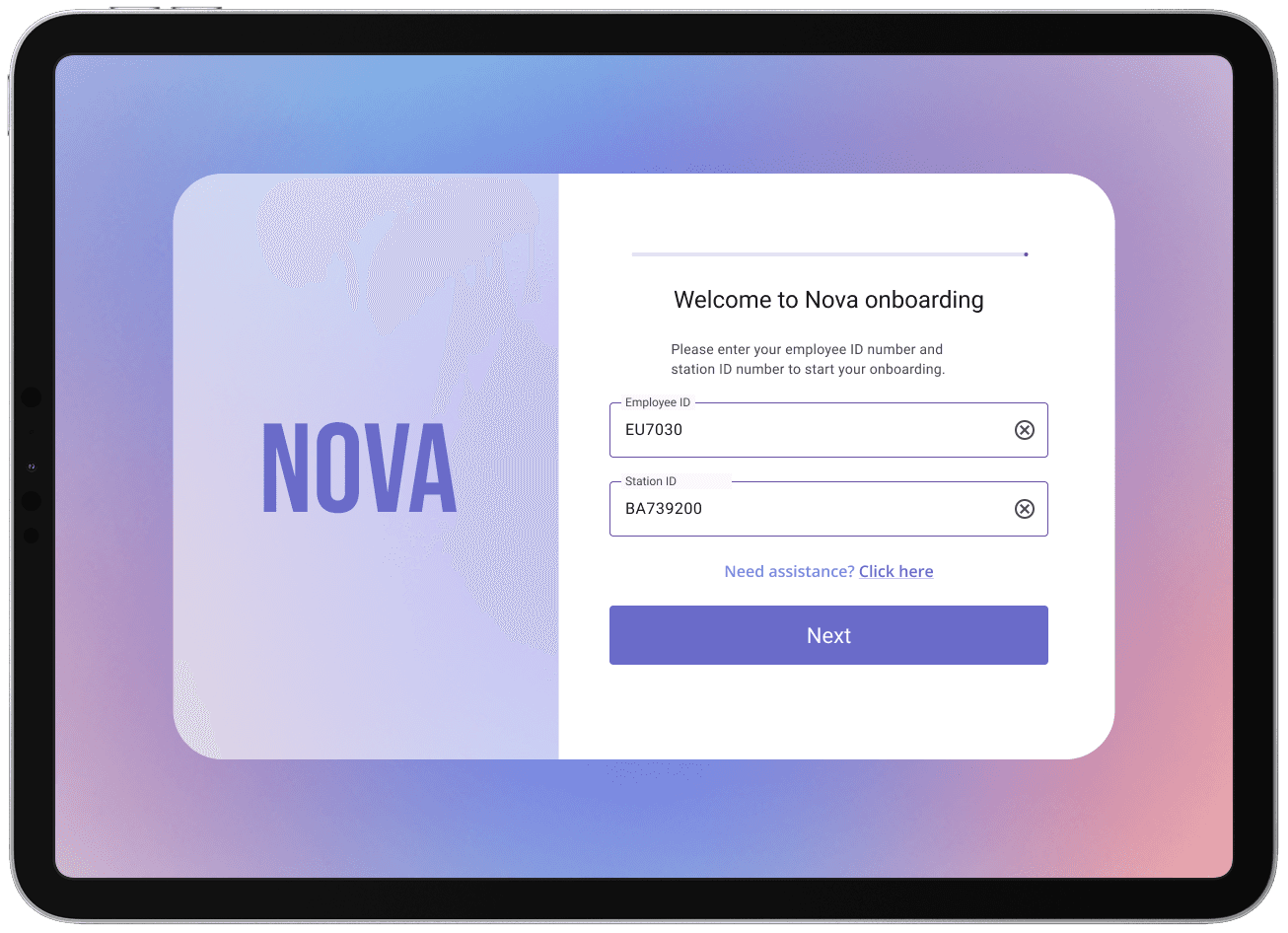
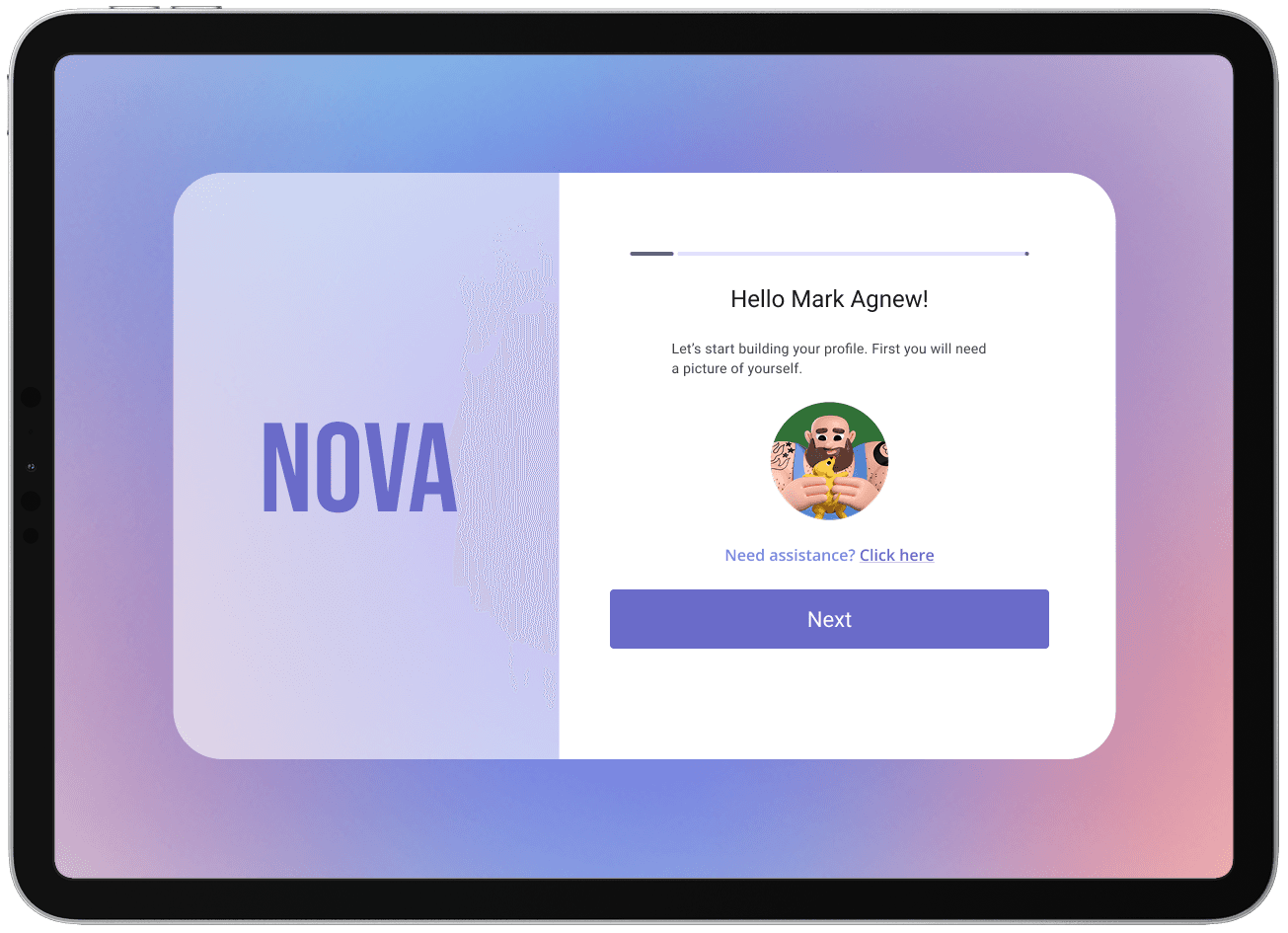
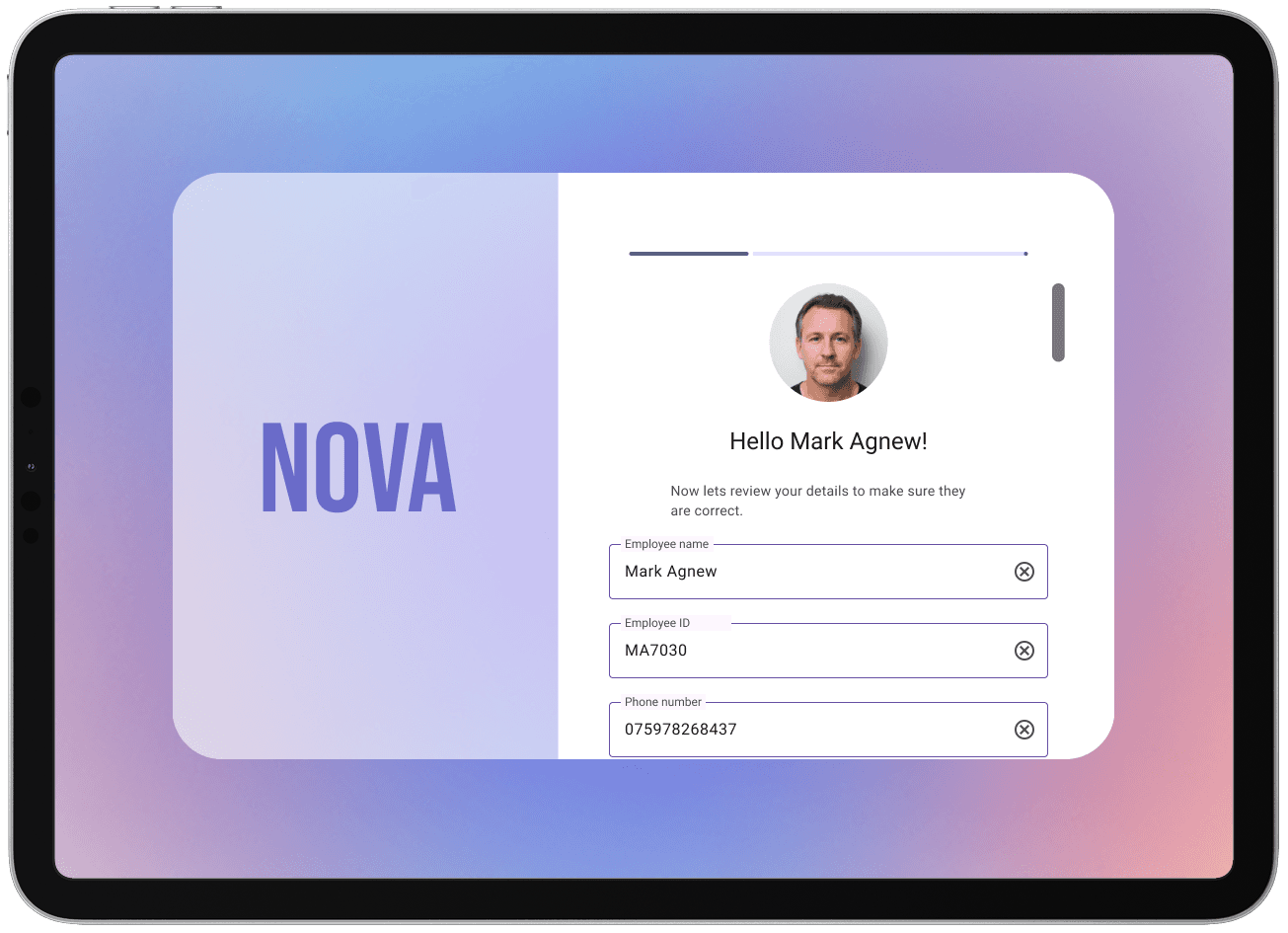
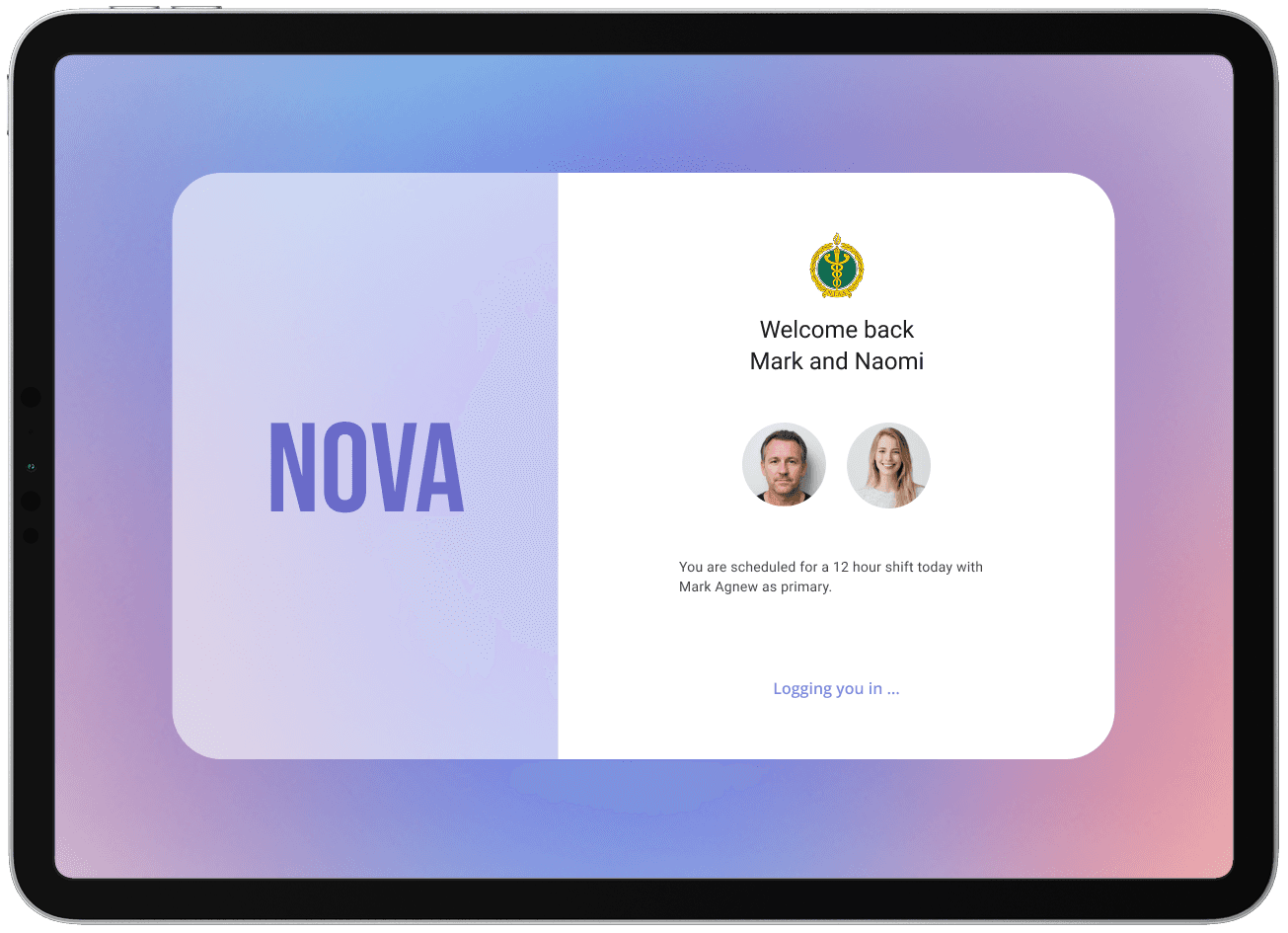
User testing sessions with paramedics provided feedback on interaction clarity, voice responsiveness, and interface structure. Their insights informed refinements to screen layouts and feature prioritisation. I also designed a streamlined onboarding experience to help new users adapt quickly without distraction from their primary duties.
Typography and visual hierarchy were carefully chosen for instant recognition, embodying Nova’s core values: Clarity. Speed. Empowerment. Trust.
OUTCOME & REFLECTION
Here is a link to a video of the final prototype
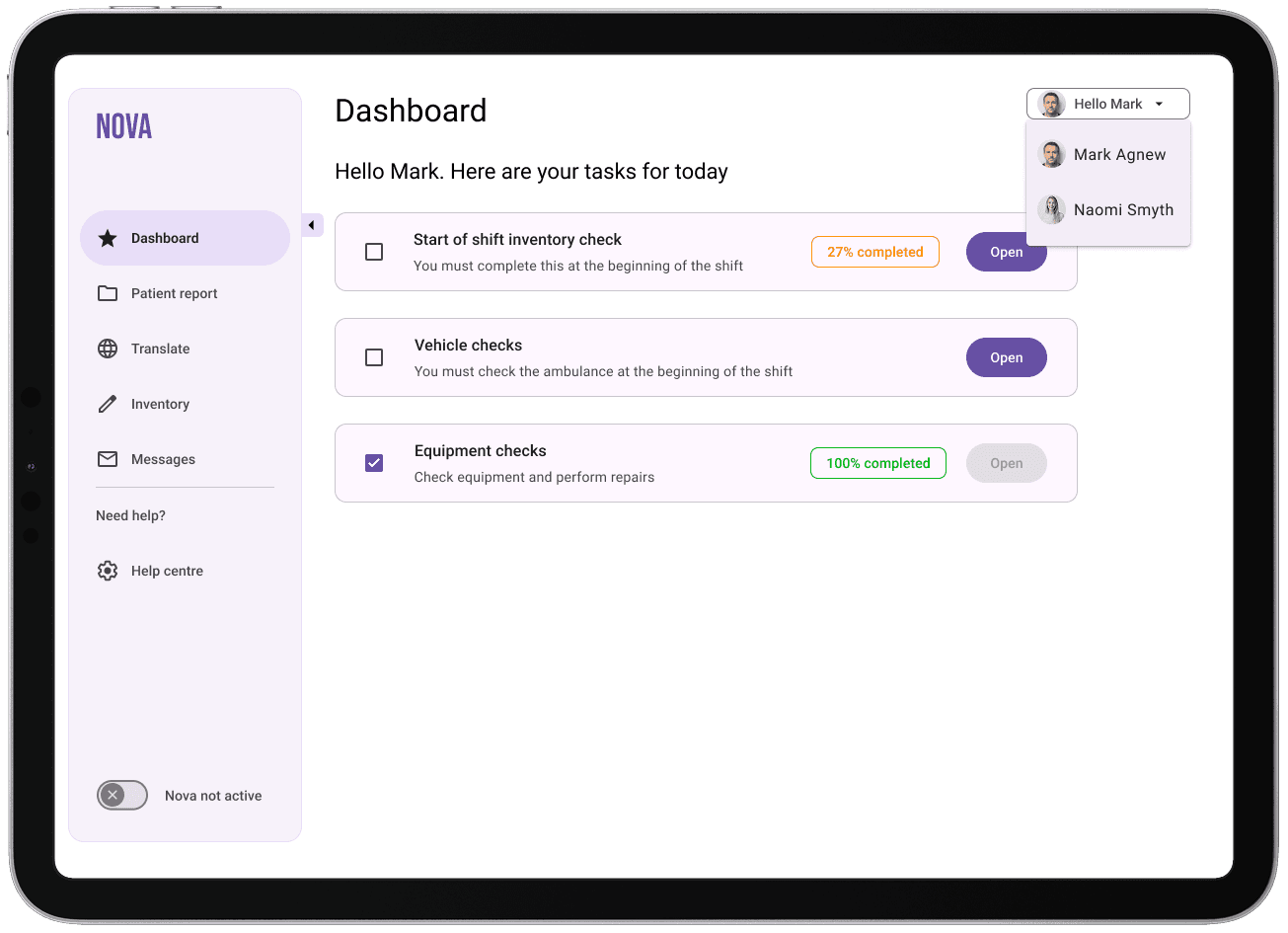
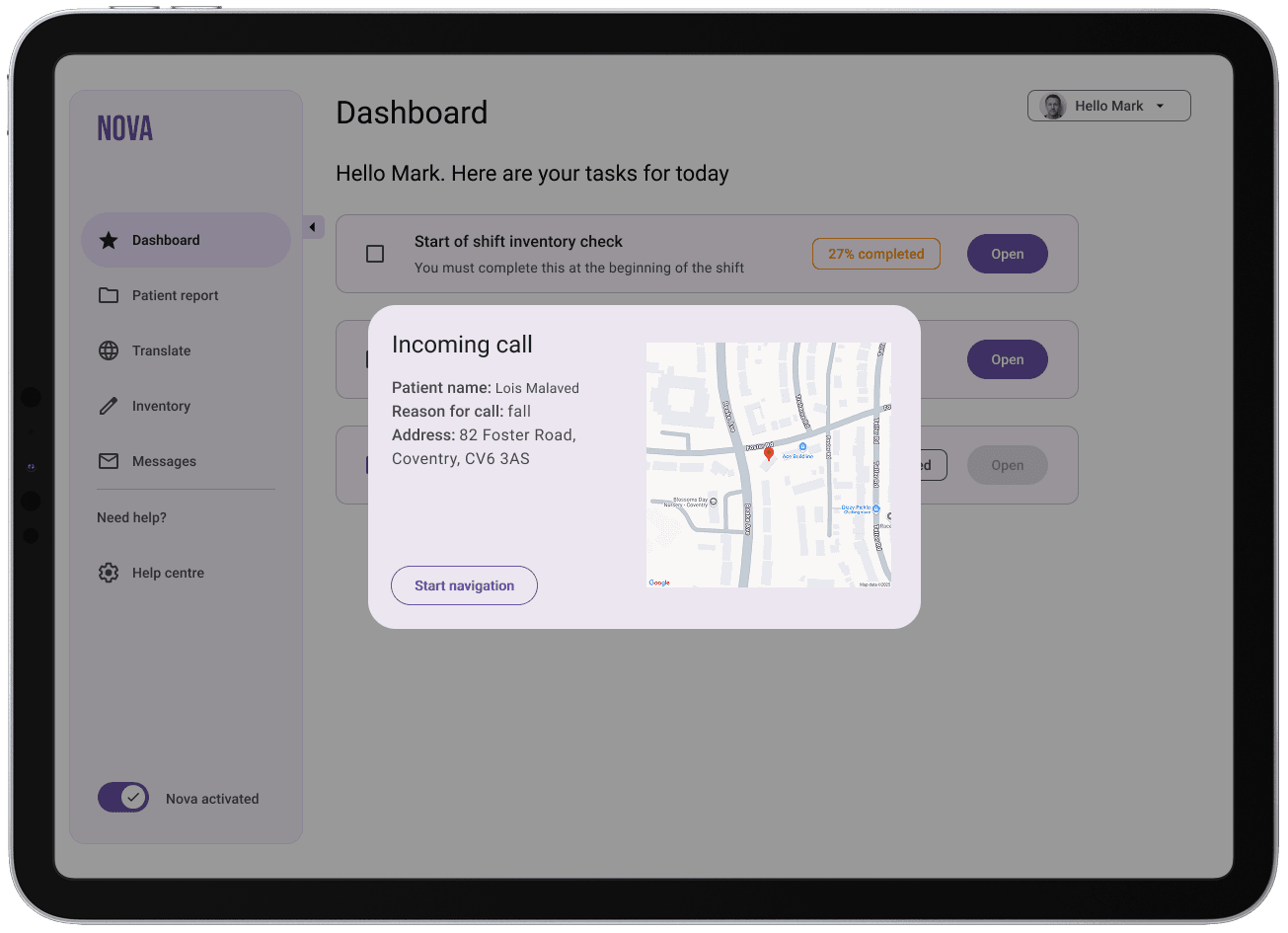
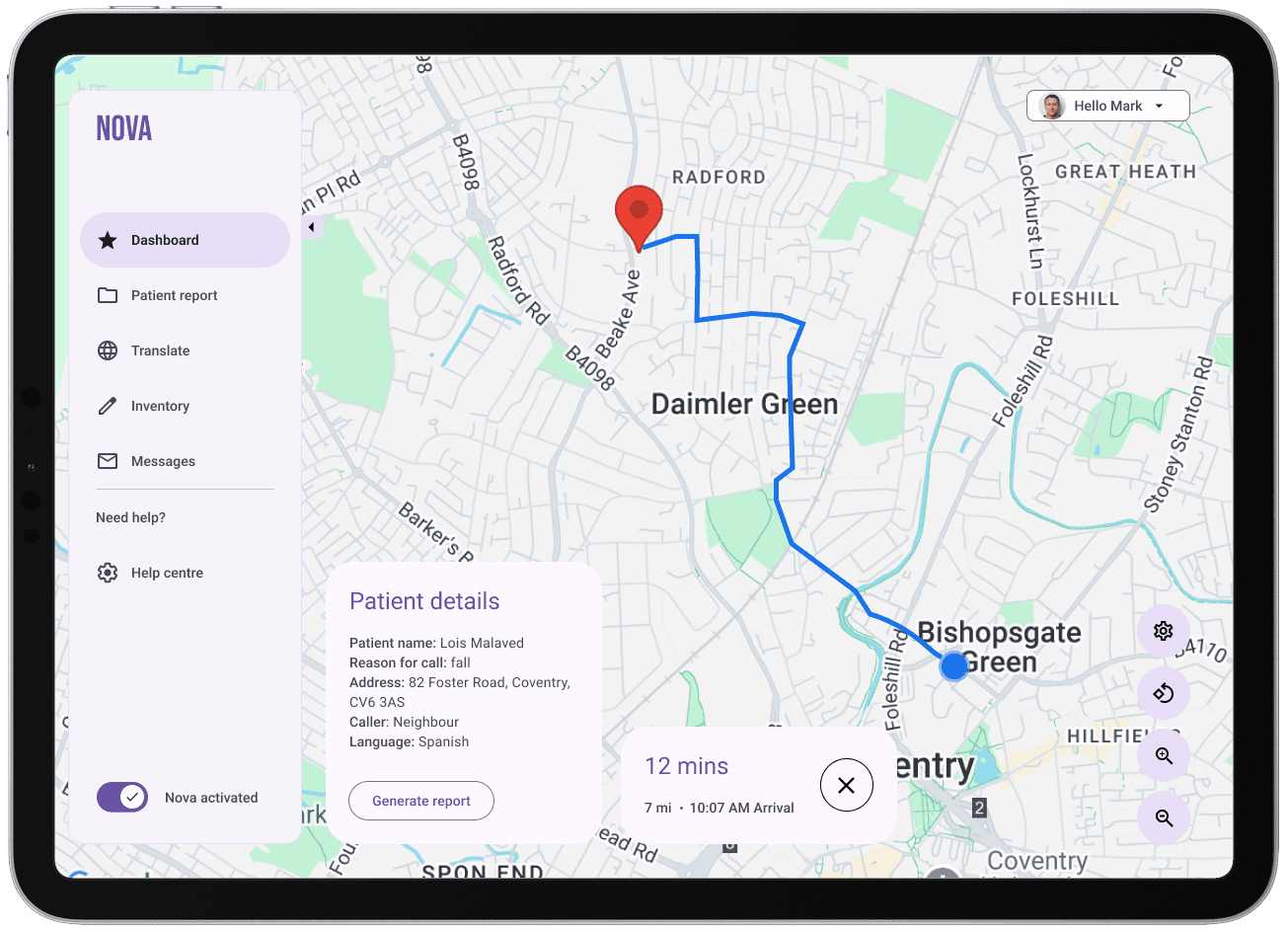
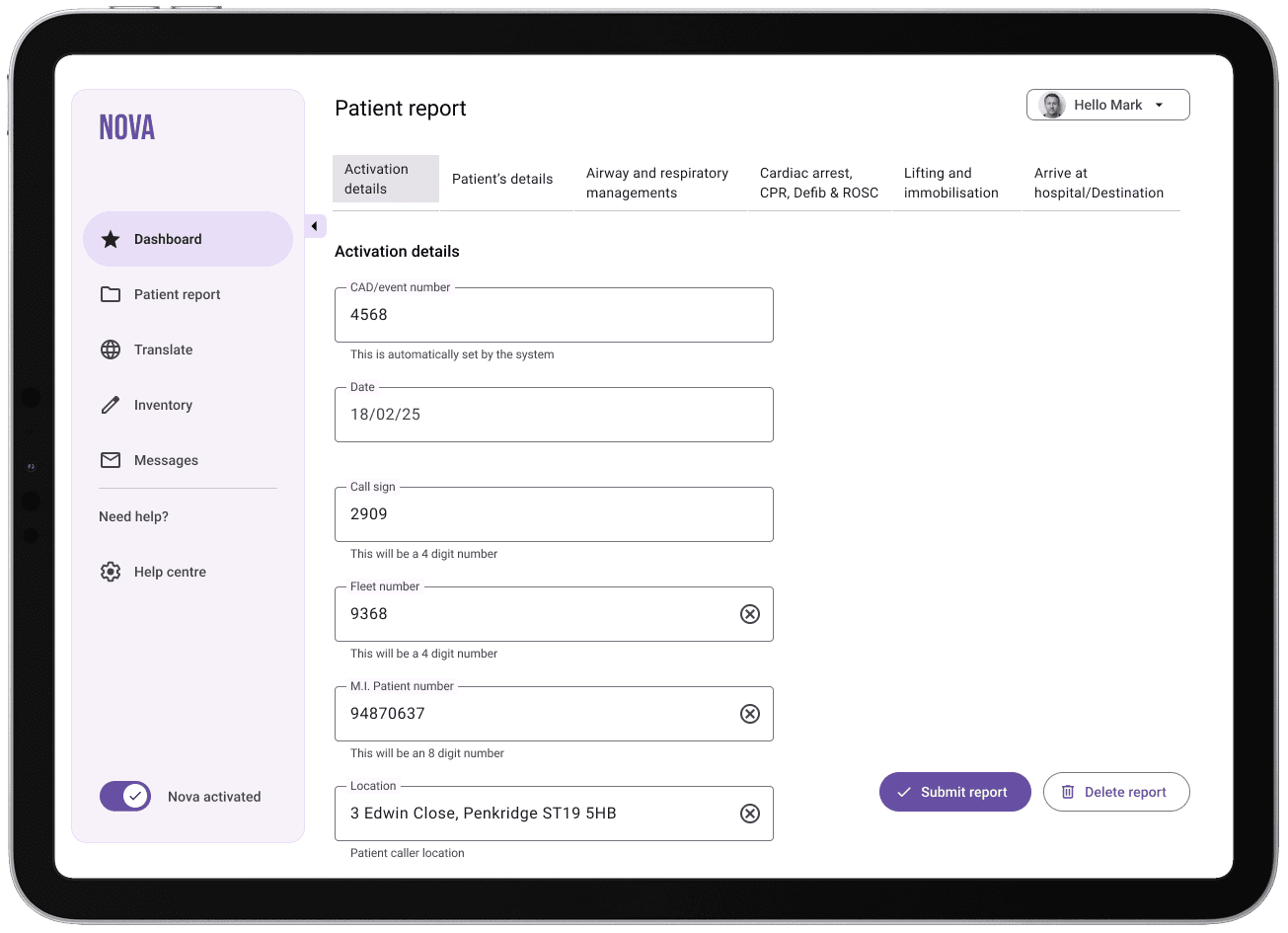
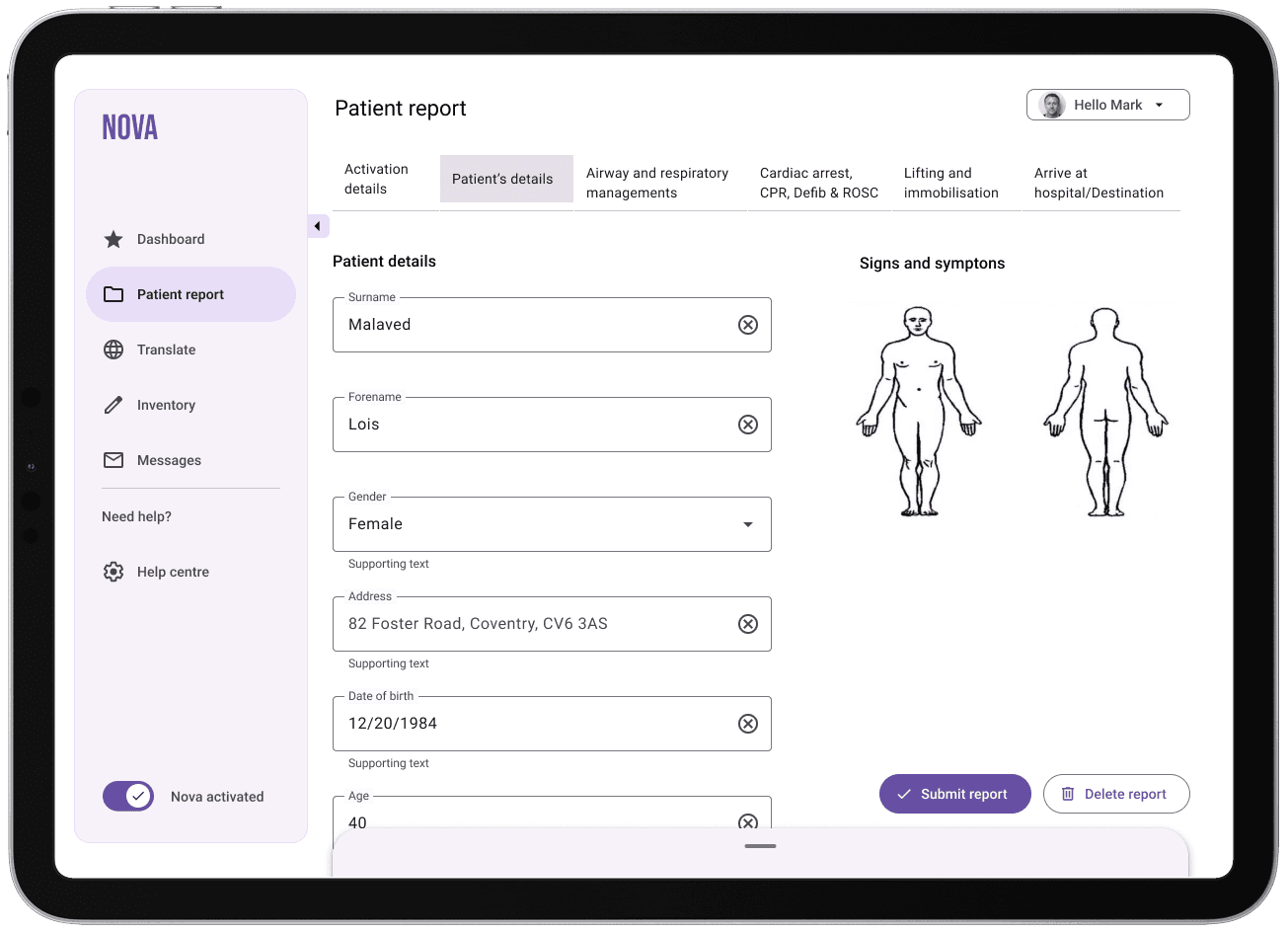
The final prototype illustrates how Nova can seamlessly integrate into existing NHS workflows, providing:
Automated patient report generation
Real-time translation and transcription
Simplified navigation and inventory support
Data-driven insights for more informed decisions
Nova demonstrates how human-centred design can reduce cognitive load, support frontline workers, and enhance patient care in moments that truly matter.
This project strengthened my ability to balance technical feasibility, user empathy, and visual clarity, reaffirming my passion for designing tools that bring simplicity and humanity to complex, high-pressure environments.
All the documentation for my project can be found in my blog and my full project report, including the launch strategy and brand guidelines can be found here.
More Projects


UI / UX Design
Nova
Nova is a digital assistant for UK paramedics that automates patient reporting, provides real‑time translation, and delivers actionable insights — helping emergency teams work faster and with greater clarity. Impact: Cut documentation time by 45% and improved translation accuracy in multilingual emergencies.
Year :
2024 - 2025
Industry :
Healthcare & tech
Client :
University project (final year)
Project Duration :
9 months
NOVA – CLARITY, SPEED, AND SUPPORT — WHEN EVERY SECOND COUNTS.
✨ Success metrics
Reduced average time to record patient data by 45% (prototype usability testing)
Improved information clarity and retrieval accuracy by 60% during simulated emergency workflows
Increased user confidence and satisfaction from 3.1 to 4.8/5 in usability testing
Expected impact: faster decision‑making, reduced cognitive load, and improved communication between paramedics and hospital staff
Context
In the fast‑paced, high‑stress world of emergency medicine, paramedics must make life‑saving decisions within seconds — often while juggling patient care, note‑taking, navigation, and communication.
Nova emerged from my interest in designing technology that alleviates pressure in critical environments. Through research into the daily challenges faced by UK paramedics, I discovered that many still rely on manual reporting processes, fragmented systems, and limited tools for translation and communication.
This insight sparked the concept for Nova — a tablet‑based digital assistant built to support paramedics in the field through automation, clarity, and real‑time assistance.
Software: Adobe suit, Figma, Maze, Miro, Notion, Zoom.
Skills: Accessibility design, Branding, Competitor analysis, Data collection & analysis, Information architecture, Journey mapping, Usability testing, User research & testing, UX & UI, Wireframing & Prototyping.
RESEARCH & DISCOVERY
I began by exploring the paramedic workflow within NHS ambulance services to understand how technology fits into their daily operations. Through informal interviews, paramedics described the intensity and unpredictability of their work — managing life‑threatening situations while navigating limited time, space, and tools. They expressed frustration over constant switching between patient care, reporting, and equipment management, often relying on manual note‑taking and paper‑based systems.
Secondary research into existing emergency service technologies revealed four major challenges:
Manual data entry during emergencies
Language barriers between patients and responders
Inefficient inventory tracking
Lack of integration and real‑time data insights
Mapping the current journey from dispatch to hospital handover highlighted cognitive overload and inefficiency. This revealed an opportunity for hands‑free, context‑aware assistance that could streamline documentation, improve communication, and enhance overall efficiency on the front line.
Here is my initial research brief.
CONCEPT & IDEATION
From these findings, Nova was conceptualised as a digital assistant capable of listening, learning, and supporting paramedics in real time. Key features included:
Voice‑activated transcription of patient information
Real‑time translation through live voice‑to‑text and audio output
Automated reporting to populate patient care records
Integrated data insights for faster, better‑informed decisions
Full voice‑only navigation for hands‑free operation
The name Nova represents light and clarity — guiding professionals through high‑pressure moments with confidence and precision.
DESIGN DEVELOPMENT
With the concept validated, I focused on building a clear, accessible interface tailored to the ambulance environment.
Starting with hand‑drawn sketches, I explored layouts that balanced visibility and usability, then evolved them into low‑fidelity wireframes in Figma to refine navigation and hierarchy before moving into high‑fidelity prototyping.
Throughout the process, I prioritised simplicity and speed — ensuring Nova could be operated quickly, even under stress or in motion. Accessibility and legibility were central, leading to a design system built around a high‑contrast palette of lavender purple (#9479B9), blue‑violet (#6A6BC9), white, and black.
I also developed Nova’s brand identity to integrate seamlessly within NHS systems while maintaining warmth and personality. The goal was to create a product that felt supportive and human, conveying calm and confidence without compromising clarity.
User testing sessions with paramedics provided feedback on interaction clarity, voice responsiveness, and interface structure. Their insights informed refinements to screen layouts and feature prioritisation. I also designed a streamlined onboarding experience to help new users adapt quickly without distraction from their primary duties.
Typography and visual hierarchy were carefully chosen for instant recognition, embodying Nova’s core values: Clarity. Speed. Empowerment. Trust.
OUTCOME & REFLECTION
Here is a link to a video of the final prototype
The final prototype illustrates how Nova can seamlessly integrate into existing NHS workflows, providing:
Automated patient report generation
Real-time translation and transcription
Simplified navigation and inventory support
Data-driven insights for more informed decisions
Nova demonstrates how human-centred design can reduce cognitive load, support frontline workers, and enhance patient care in moments that truly matter.
This project strengthened my ability to balance technical feasibility, user empathy, and visual clarity, reaffirming my passion for designing tools that bring simplicity and humanity to complex, high-pressure environments.
All the documentation for my project can be found in my blog and my full project report, including the launch strategy and brand guidelines can be found here.
More Projects
UI / UX Design
Nova
Nova is a digital assistant for UK paramedics that automates patient reporting, provides real‑time translation, and delivers actionable insights — helping emergency teams work faster and with greater clarity. Impact: Cut documentation time by 45% and improved translation accuracy in multilingual emergencies.
Year :
2024 - 2025
Industry :
Healthcare & tech
Client :
University project (final year)
Project Duration :
9 months
NOVA – CLARITY, SPEED, AND SUPPORT — WHEN EVERY SECOND COUNTS.
✨ Success metrics
Reduced average time to record patient data by 45% (prototype usability testing)
Improved information clarity and retrieval accuracy by 60% during simulated emergency workflows
Increased user confidence and satisfaction from 3.1 to 4.8/5 in usability testing
Expected impact: faster decision‑making, reduced cognitive load, and improved communication between paramedics and hospital staff
Context
In the fast‑paced, high‑stress world of emergency medicine, paramedics must make life‑saving decisions within seconds — often while juggling patient care, note‑taking, navigation, and communication.
Nova emerged from my interest in designing technology that alleviates pressure in critical environments. Through research into the daily challenges faced by UK paramedics, I discovered that many still rely on manual reporting processes, fragmented systems, and limited tools for translation and communication.
This insight sparked the concept for Nova — a tablet‑based digital assistant built to support paramedics in the field through automation, clarity, and real‑time assistance.
Software: Adobe suit, Figma, Maze, Miro, Notion, Zoom.
Skills: Accessibility design, Branding, Competitor analysis, Data collection & analysis, Information architecture, Journey mapping, Usability testing, User research & testing, UX & UI, Wireframing & Prototyping.
RESEARCH & DISCOVERY
I began by exploring the paramedic workflow within NHS ambulance services to understand how technology fits into their daily operations. Through informal interviews, paramedics described the intensity and unpredictability of their work — managing life‑threatening situations while navigating limited time, space, and tools. They expressed frustration over constant switching between patient care, reporting, and equipment management, often relying on manual note‑taking and paper‑based systems.
Secondary research into existing emergency service technologies revealed four major challenges:
Manual data entry during emergencies
Language barriers between patients and responders
Inefficient inventory tracking
Lack of integration and real‑time data insights
Mapping the current journey from dispatch to hospital handover highlighted cognitive overload and inefficiency. This revealed an opportunity for hands‑free, context‑aware assistance that could streamline documentation, improve communication, and enhance overall efficiency on the front line.
Here is my initial research brief.
CONCEPT & IDEATION
From these findings, Nova was conceptualised as a digital assistant capable of listening, learning, and supporting paramedics in real time. Key features included:
Voice‑activated transcription of patient information
Real‑time translation through live voice‑to‑text and audio output
Automated reporting to populate patient care records
Integrated data insights for faster, better‑informed decisions
Full voice‑only navigation for hands‑free operation
The name Nova represents light and clarity — guiding professionals through high‑pressure moments with confidence and precision.
DESIGN DEVELOPMENT
With the concept validated, I focused on building a clear, accessible interface tailored to the ambulance environment.
Starting with hand‑drawn sketches, I explored layouts that balanced visibility and usability, then evolved them into low‑fidelity wireframes in Figma to refine navigation and hierarchy before moving into high‑fidelity prototyping.
Throughout the process, I prioritised simplicity and speed — ensuring Nova could be operated quickly, even under stress or in motion. Accessibility and legibility were central, leading to a design system built around a high‑contrast palette of lavender purple (#9479B9), blue‑violet (#6A6BC9), white, and black.
I also developed Nova’s brand identity to integrate seamlessly within NHS systems while maintaining warmth and personality. The goal was to create a product that felt supportive and human, conveying calm and confidence without compromising clarity.
User testing sessions with paramedics provided feedback on interaction clarity, voice responsiveness, and interface structure. Their insights informed refinements to screen layouts and feature prioritisation. I also designed a streamlined onboarding experience to help new users adapt quickly without distraction from their primary duties.
Typography and visual hierarchy were carefully chosen for instant recognition, embodying Nova’s core values: Clarity. Speed. Empowerment. Trust.
OUTCOME & REFLECTION
Here is a link to a video of the final prototype
The final prototype illustrates how Nova can seamlessly integrate into existing NHS workflows, providing:
Automated patient report generation
Real-time translation and transcription
Simplified navigation and inventory support
Data-driven insights for more informed decisions
Nova demonstrates how human-centred design can reduce cognitive load, support frontline workers, and enhance patient care in moments that truly matter.
This project strengthened my ability to balance technical feasibility, user empathy, and visual clarity, reaffirming my passion for designing tools that bring simplicity and humanity to complex, high-pressure environments.
All the documentation for my project can be found in my blog and my full project report, including the launch strategy and brand guidelines can be found here.